Supporting Behaviour & Regulation in Care Settings
Use observation, prevention, safe responses and clear reporting when difficult situations arise during care.
- STATUS
- Open for interest · Apr–Jun 2027
- TIME
- 9:00 AM – 3:00 PM
- VENUE
- Klang Valley · TBC
- COURSE FEE
- RM 1,999· includes materials, refreshments and a certificate of attendance
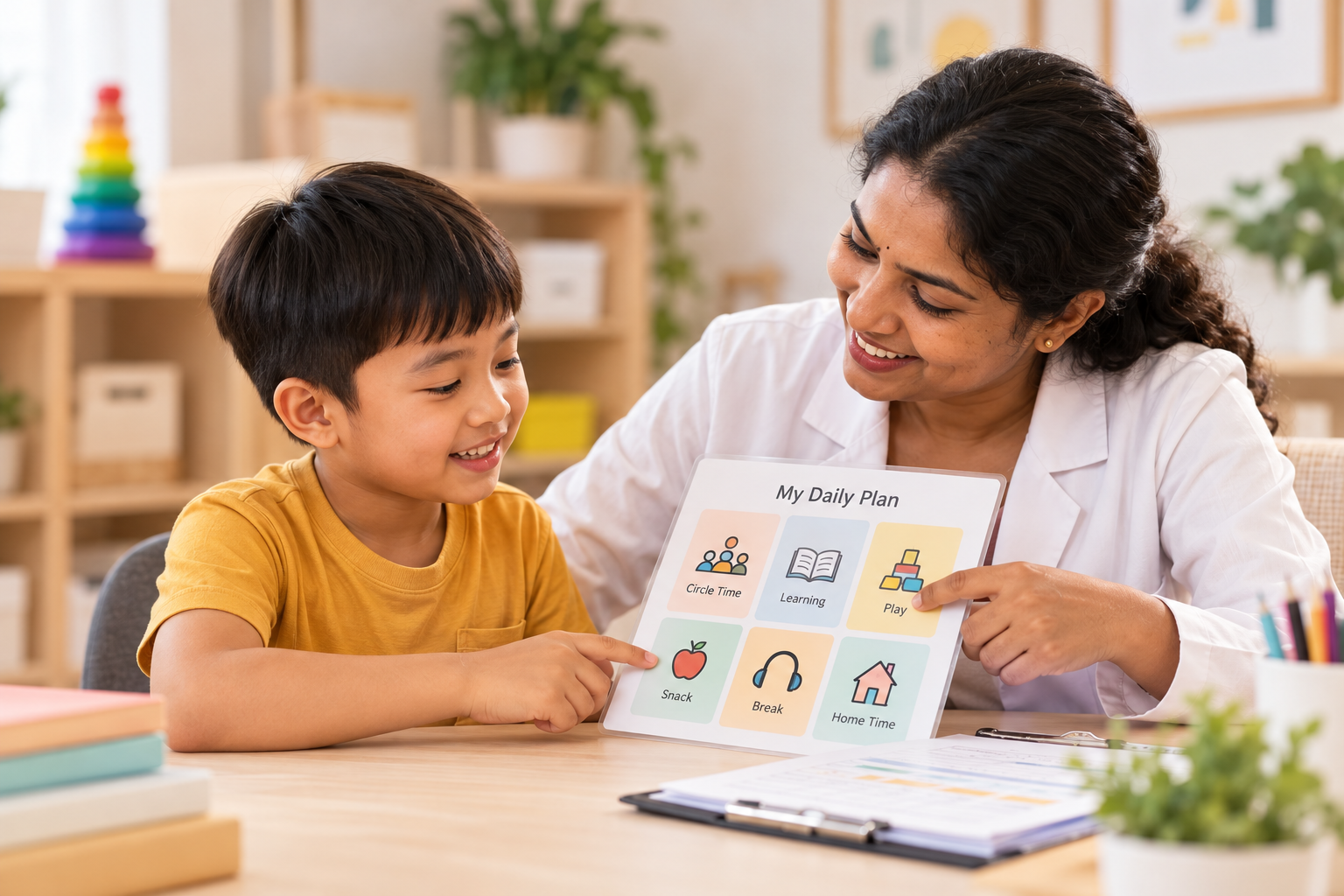
“Observe carefully, respond calmly, and communicate effectively across the entire care circle.”
Observe Carefully, Respond with Care
Build a consistent approach to behaviour and distress that respects the child and supports communication across the care team.
Observe and document behaviour accurately
Respond calmly to distress and challenging situations
Support safety through prevention and teamwork
For caregivers seeking greater confidence in understanding distress and responding calmly and consistently.
Special needs caregivers
Those supporting children who experience emotional or behavioural challenges.
Home & centre-based support staff
Those seeking practical approaches to observation, prevention and responding to distress.
Home-based & private caregivers
Individuals assisting children with regulation and participation in learning environments.
What you'll explore
Observing & Recording Behaviour
Learn to describe what happened using specific, observable information. Explore the distinction between observation and interpretation, and why clear records support shared understanding.
Identifying Environmental & Situational Triggers
Notice patterns around demands, transitions, sensory experiences and communication. Consider how context can inform questions for the family and professionals without assuming a cause.
Preventive Strategies & Environmental Adaptation
Explore agreed adjustments to routines, communication and the environment that may reduce avoidable stress. Consider predictability, accessible choices and preparation for transitions.
Responding Safely to Escalation, Meltdowns & Distress
Explore supportive responses guided by the child's plan and your training. Focus on recognising distress, reducing demands where appropriate and seeking assistance through agreed channels.
Post-Incident Reflection, Documentation & Communication
Consider how to record an incident, share relevant information and reflect with the care team. Explore how follow-up can improve consistency and inform future prevention.

Dr. Thayalani Narayanasamy Gomez
Lead Educational & Child Psychologist · Head of SENPHD IN PHILOSOPHY · PSYCHOLOGY (NEURODEVELOPMENTAL DISORDERS) · 20+ YEARS20+ Years of Expertise in Child Development & Family SupportWith over 20 years of experience in psychology, education and child development, Dr. Thaya combines specialist expertise with her personal journey as a mother raising a child with autism and ADHD. She supports children with Autism, ADHD and SEN, helping families understand their child's needs, navigate emotions and create calmer, more supportive home environments.
“When we see beyond the diagnosis, we begin to truly understand and accept our child as a whole person.”
Supporting Behaviour & Regulation in Care Settings
- DURATION
- 3 days
- LANGUAGE
- Conducted in English
- TRAINER
- Dr. Thayalani Narayanasamy Gomez
- FOR
- Caregivers
Be first to know when dates are confirmed. Enter your details below to receive early notification, full curriculum notes, and priority booking before public release.